
Why digital transformation seems overwhelming.
Digital transformation can feel like walking into a gym for the first time. Endless equipment, unfamiliar routines, and no clear plan. But just like fitness, success isn’t about perfection, it’s about consistency and measurable improvement.
Every shopfloor starts from a different baseline. Some are already data-driven and connected. Others rely heavily on tribal knowledge and manual routines. Both are valid starting points. The real competition isn’t other factories, it’s yesterday’s performance.
Digital transformation is not a one-time initiative. It’s a long-term conditioning program for your shopfloor.
Getting started: your digital transformation warm-up.
Before lifting heavy digital initiatives, you need a warm-up. That means:
- Understanding current performance and bottlenecks.
- Defining realistic, outcome-based goals.
- Committing to incremental progress.
Trying to digitize everything at once is the fastest way to stall momentum. The most successful transformations start small, prove value, then scale.
The fitness analogy explained.
Digital transformation works best when every component has a role, just like a training program.
The Body = The Shopfloor
Your shopfloor is a connected system. Improvements in one area affect the entire operation.
The Trainer = Experts
Domain experts guide the transformation, helping prioritize where effort delivers the most impact.
The Workout Plan = Use Cases
Focused use cases align digital tools with real operational goals, not abstract roadmaps.
The Exercises = Individual Use Cases
Each use case targets a specific challenge, such as CNC programming, tool management, or changeover optimization.
The Equipment = Digital Applications
Digital solutions are the equipment that activate and strengthen shopfloor capabilities.
The Gym = The Digital Environment
This is where everything comes together, people, processes, tools, and data.
Your performance goals: the three pillars of shopfloor fitness.
Speed: From Order to Product Faster
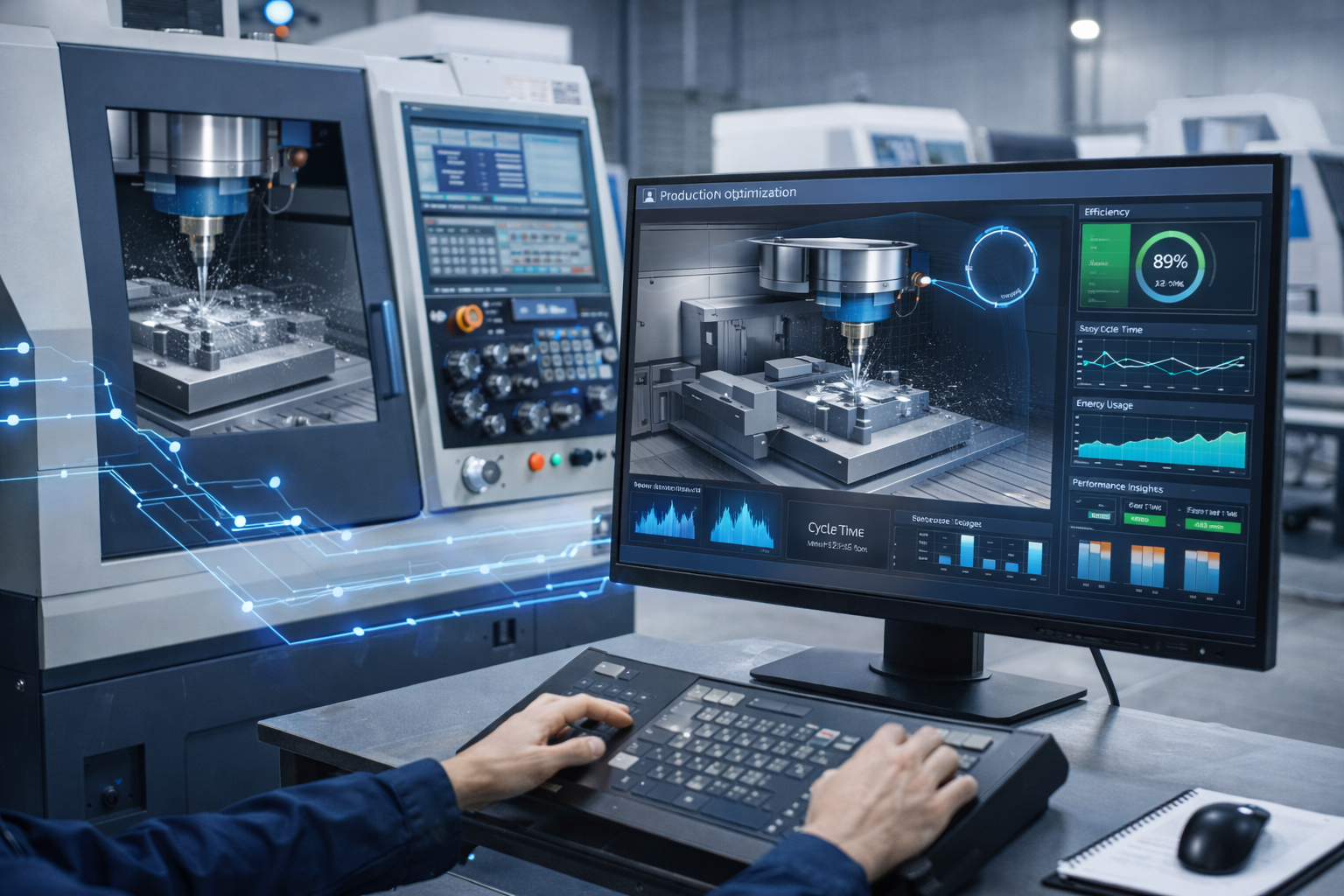
Speed comes from removing friction. Digital workflows eliminate manual handoffs, reduce setup time, and accelerate programming. One of the biggest speed multipliers is the CNC Digital Twin. It allows teams to simulate, validate, and optimize machining processes before they ever reach the real machine. Results:
- Faster setup.
- Fewer startup issues.
- Shorter lead times.
Agility: Adapt Without Losing Balance
Agility is the ability to respond quickly without disrupting production. Design changes, small batch orders, and shifting priorities demand flexible workflows. Digital transparency enables confident decision-making without stopping machines. CNC Digital Twins act as agility trainers, allowing teams to test scenarios and validate changes virtually. Results:
- Faster response to change.
- Reduced production risk.
- Improved planning confidence.
Endurance: Keep Machines Running Strong
Endurance is about consistency and uptime. With better insight into machine behavior, tool wear, and process stress, manufacturers reduce unplanned downtime and extend asset life. Predictive insight becomes recovery training for machines, keeping them productive shift after shift. Results:
- Higher OEE.
- Longer tool life.
- More predictable output.
How Siemens supports shopfloor fitness.
Just like a modern gym uses specialized equipment, Siemens Digital Industry Software provides targeted digital tools that strengthen different aspects of shopfloor performance.
Plant Simulation acts as a virtual training mirror, enabling teams to simulate and optimize machining processes off the real machine. This reduces risk, shortens setup times, and improves throughput without disrupting production.
When combined with digital twins and connected manufacturing workflows, Siemens tools help manufacturers train smarter, not harder.
The ROI of it all.
Manufacturers applying a structured, use-case-driven digital approach typically see:
- 15–30% reduction in setup and changeover time.
- 20–40% fewer programming and startup errors.
- 10–20% improvement in overall equipment effectiveness.
- Measurable reductions in scrap and rework.
- Faster time-to-market for new or modified parts.
For mid-size machining operations, this routinely translates into hundreds of thousands to millions in annual operational impact.
Beat your personal best.
Digital transformation doesn’t require a giant leap. It starts with the first workout. By treating your shopfloor like an athlete, setting clear goals, building digital muscles gradually, and relying on the right training environment, improvement becomes sustainable and repeatable.
Transformation isn’t a destination. It’s a mindset.