
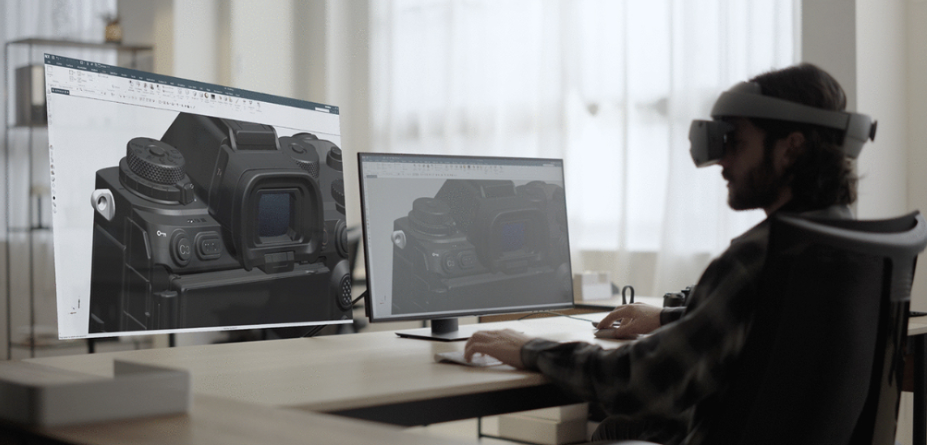
How XR is accelerating digital twin technology.
Manufacturing has been digital for years, but what’s changing now is how real it feels. Digital twins are no longer static simulations. They are becoming immersive, interactive environments powered by XR (Extended Reality), enabling engineers to step inside their designs before a single part is manufactured. This shift is not incremental. It’s structural.
Digital twins: from visualization to decision engine.
Digital twins started as engineering tools used to validate designs and simulate performance. Today, they sit at the center of product development, manufacturing, and lifecycle optimization. A digital twin allows manufacturers to:
- Simulate product performance before physical prototyping.
- Optimize machine behavior under real-world conditions.
- Reduce engineering iteration cycles.
- Improve cross-team collaboration across global locations.
When combined with advanced engineering platforms like Siemens NX, digital twins become fully connected engineering environments rather than isolated simulation models. NX enables engineers to move seamlessly from design to simulation to manufacturing, without breaking data continuity. That continuity is what makes digital twins operational instead of theoretical.
XR changes the game: you don’t just view the model anymore.
Extended Reality (XR) introduces immersion into digital twin workflows. Instead of viewing a 3D model on a flat screen, engineers can:
- Walk around a full-scale virtual machine.
- Inspect internal components in real time.
- Collaborate with global teams in the same virtual environment.
- Validate fit, scale, and ergonomics before manufacturing.
VR creates full immersion. AR overlays digital models into physical environments. Together, they eliminate guesswork in spatial understanding. But the real breakthrough isn’t visualization, it’s decision speed.
The real challenge: industrial-grade 3D data.
Manufacturing models are not lightweight. We’re talking about:
- Millions of polygons per assembly.
- Multi-system dependencies (mechanical, electrical, controls).
- Real-time simulation requirements.
- Global collaboration across engineering teams.
Traditional XR devices struggle with this level of complexity. The result is lag, reduced fidelity, and time-consuming data preparation. That’s where industrial XR workflows are shifting toward streaming-based architectures.
XR streaming: fixing performance and security simultaneously.
XR streaming changes the architecture completely. Instead of running heavy workloads on headsets or mobile devices, all processing happens on high-performance servers or cloud infrastructure. Devices simply receive the rendered experience. This solves three major problems:
- Performance: no device limitations.
- Fidelity: Full-resolution CAD-level visualization.
- Security: Sensitive IP stays centralized.
For machine manufacturers, this is critical. Engineering data never leaves controlled environments, reducing exposure to IP theft and unauthorized access.
Siemens NX + XR: where engineering actually becomes immersive.
The real acceleration happens when XR is combined with engineering platforms like Siemens NX. NX provides:
- Integrated CAD/CAM/CAE workflows.
- Full digital twin creation capabilities.
- High-fidelity engineering data structures.
- Seamless design-to-manufacturing continuity.
When that data is streamed into XR environments, engineers don’t just design machines, they experience them at scale. This eliminates late-stage surprises in:
- Machine assembly fit.
- Serviceability access.
- Operator ergonomics.
- Maintenance planning.
Mistakes caught in XR cost almost nothing to fix. Mistakes caught on the shop floor cost real money.
Why manufacturers are investing now.
The business case is becoming impossible to ignore. Companies implementing XR-enabled digital twin workflows typically see:
- 30–60% reduction in physical prototyping costs.
- 25–50% faster design validation cycles.
- 20–40% reduction in engineering change orders.
- 15–30% faster time-to-production readiness.
The biggest ROI driver isn’t visualization, it’s compression of decision cycles. Every design iteration saved compounds across engineering, procurement, and production.
Collaboration without geography.
One of the most overlooked advantages is global collaboration. With XR streaming:
- Engineers in different countries work in the same virtual model.
- Real-time annotations replace delayed feedback loops.
- Design reviews become immersive workshops instead of slide decks.
This removes one of manufacturing’s oldest bottlenecks: communication latency between teams.
The future: platform-based XR ecosystems
The next evolution isn’t just XR, it’s centralized XR platforms. These systems will:
- Host multiple XR applications (design, training, service).
- Manage access control and security centrally.
- Integrate with PLM and engineering systems like NX.
- Support multiple XR hardware devices.
This matters because hardware fragmentation is real. Manufacturers don’t want to bet on a single headset ecosystem that may not survive. Platform-based XR ensures flexibility, continuity, and long-term scalability.
The bottom line.
XR doesn’t replace digital twins. It completes them. When combined with engineering platforms like Siemens NX, XR turns static engineering models into interactive, decision-driven environments.
Manufacturers that adopt this approach are not just improving design, they are compressing the entire product lifecycle, and in today’s market, speed wins.
If your engineering process still relies on disconnected CAD reviews, late-stage prototyping, or static design validation, you are operating with avoidable risk. Start here:
- Pilot XR visualization on one high-complexity machine design.
- Integrate NX-based digital twin workflows into validation cycles.
- Evaluate XR streaming for global engineering collaboration.
- Reduce physical prototyping dependency where possible.
The goal is simple: shorten the distance between design intent and manufacturing reality.