
The shift to predictive supply chain operations.
Supply chains have become significantly more difficult to manage. Demand changes faster than traditional planning cycles. Transportation disruptions ripple across global operations. Warehouses are expected to process more orders with fewer people. And manufacturers must continuously balance cost, speed, resilience, and customer expectations.
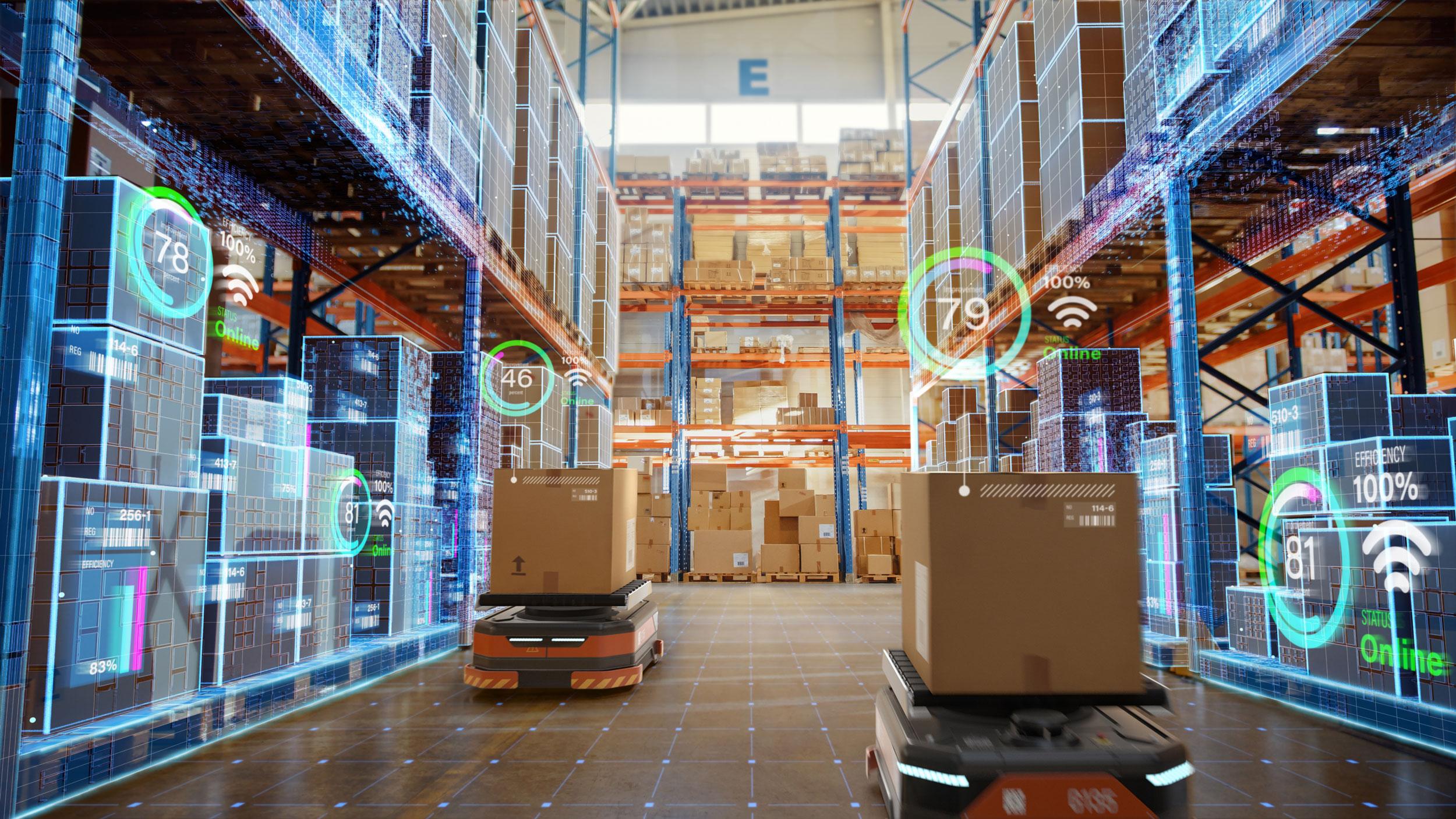
For many organizations, spreadsheets and disconnected systems are no longer enough. That’s why manufacturers and logistics operators are increasingly turning to digital twins. Digital twins use live data from warehouses, transportation, ERP, IoT, and production systems to create real-time supply chain models.
Instead of reacting after disruptions happen, organizations can simulate operational decisions before they impact the real world. Combined with Industrial AI, digital twins are becoming a powerful foundation for predictive logistics and lean operations.
Why supply chains are adopting digital twins.
Modern supply chains generate enormous amounts of operational data, but many organizations still struggle to turn that data into actionable intelligence. Digital twins solve this problem by connecting operational systems into a continuously updated digital model of the business.
Using solutions like Siemens Teamcenter and Siemens Tecnomatix, manufacturers can connect engineering, manufacturing, warehouse, and logistics operations into a unified digital thread. This allows organizations to:
- Simulate warehouse throughput before peak season.
- Predict transportation bottlenecks.
- Optimize labor allocation.
- Evaluate supplier risks.
- Improve inventory flow.
- Reduce operational waste.
- Test “what-if” scenarios before disruptions occur.
Instead of static reporting, teams gain a living operational model that continuously adapts to real-world conditions.
Where AI creates immediate value.
The biggest operational improvements often come from optimizing thousands of small daily decisions. AI-enhanced digital twins help manufacturers and warehouse operators analyze:
- Order mix changes.
- Inventory movement.
- Labor utilization.
- Transportation delays.
- Supplier performance.
- Warehouse congestion.
- Fulfillment priorities in real time.
For example, a warehouse digital twin can simulate multiple wave planning strategies each morning and recommend the most efficient labor allocation based on current demand.
A manufacturer can identify supplier risks before shortages disrupt production. A logistics operation can reroute shipments dynamically around weather events or transportation delays. This is where Industrial AI consistently delivers measurable value, organizations commonly achieve:
- 10–25% labor productivity improvements.
- Reduced overtime costs.
- Faster throughput.
- Improved inventory accuracy.
- Better warehouse utilization.
- Reduced transportation inefficiencies.
Instead of reacting after problems occur, teams can proactively optimize operations throughout the day.
How Siemens solutions support lean operations.
Digital twins become significantly more valuable when operational data is connected across the business. With Siemens Teamcenter, manufacturers can create a connected digital thread across engineering, operations, suppliers, and logistics systems, improving traceability and operational alignment.
At the operational level, Siemens Tecnomatix enables organizations to simulate warehouse operations, material flow, labor allocation, and production processes before making physical changes on the floor. This combination allows teams to:
- Reduce operational risk before deployment.
- Optimize warehouse layouts virtually.
- Improve production synchronization.
- Validate automation investments.
- Identify bottlenecks earlier.
- Scale lean manufacturing initiatives faster.
Instead of relying on assumptions, manufacturers can make decisions based on simulation-backed operational intelligence.
The biggest challenge isn’t technology.
Most digital twin initiatives fail because of poor operational discipline, not software limitations. A digital twin depends on trustworthy operational data. Common issues include:
- Poor scan compliance.
- Inventory inaccuracies.
- Manual workarounds.
- Missing transaction data.
- Inconsistent operational processes.
Even small data gaps can reduce model reliability. Successful organizations focus heavily on:
- Data governance.
- Process standardization.
- Cross-functional collaboration.
- Inventory accuracy.
- Frontline engagement.
Companies seeing the strongest results treat digital twins as operational transformation initiatives, not isolated technology deployments.
The bottom line.
Traditional supply chains were built around visibility. Modern supply chains are built around prediction and adaptability. Digital twins allow manufacturers and logistics providers to simulate operations, optimize workflows, predict disruptions, and continuously improve performance using real operational data.
With Siemens solutions, organizations can connect supply chain data, warehouse operations, and manufacturing processes into a more intelligent and resilient operational ecosystem. The companies investing now are building supply chains designed not just to survive disruption, but to adapt faster than competitors.
Learn how Teamcenter and Tecnomatix help manufacturers improve logistics visibility, warehouse performance, and operational agility.