
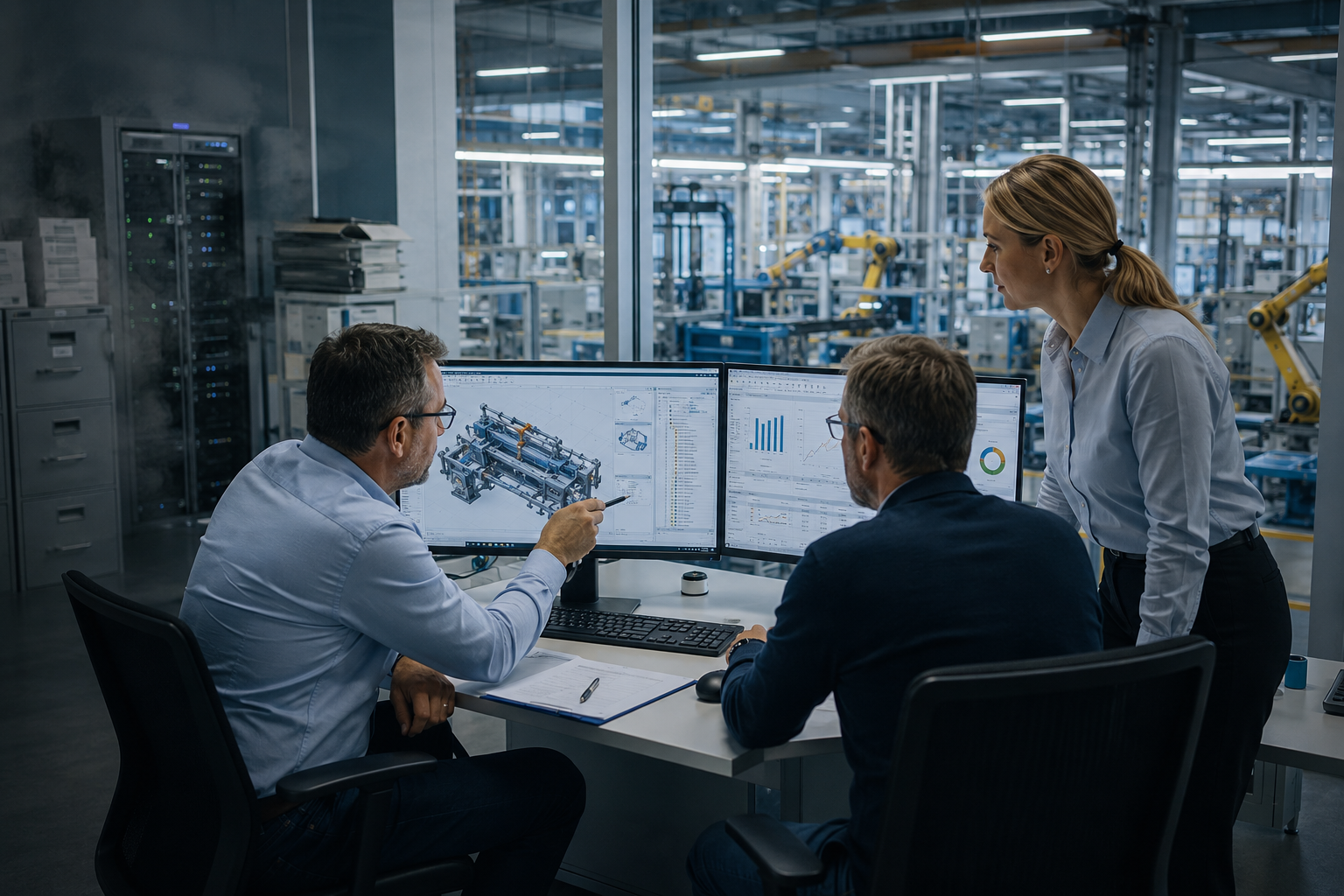
Why legacy PLM is holding your business back, and what to do about it.
Manufacturers have invested billions in engineering software over the past two decades, yet many product development teams still spend far too much time searching for information, managing disconnected systems, and working around outdated processes. The culprit often isn’t the engineers or the tools they use every day, it’s the legacy Product Lifecycle Management (PLM) system sitting at the center of the organization.
Designed for a different era of product development, many legacy PLM platforms struggle to support today’s globally distributed teams, increasingly complex products, and accelerated development cycles. As organizations pursue digital transformation, modernizing PLM has become less of an IT initiative and more of a strategic business decision.
Cloud-native solutions like Siemens Teamcenter X are helping manufacturers replace technical debt with a connected, scalable digital foundation that improves collaboration, accelerates innovation, and reduces the total cost of ownership.
The hidden cost of legacy PLM.
Many legacy PLM systems continue to function, but simply functioning is no longer enough. Today’s manufacturers must manage software-defined products, global engineering teams, complex supplier networks, and increasingly compressed development schedules. Unfortunately, older PLM environments often introduce friction rather than removing it. Common challenges include:
- Engineering data spread across disconnected systems.
- Duplicate files and inconsistent product information.
- Costly customizations that complicate upgrades.
- Limited collaboration between engineering, manufacturing, suppliers, and service organizations.
- Manual workflows that delay engineering changes and approvals.
Instead of accelerating innovation, engineers spend valuable time locating information, validating revisions, and reconciling disconnected data. The result is slower product development, higher operating costs, and reduced organizational agility.
Why modern PLM delivers business value.
Modernizing PLM is about far more than replacing software. It creates a connected digital environment where product information becomes accessible, consistent, and available throughout the entire product lifecycle.
With Siemens Teamcenter X, organizations can centralize product data while connecting engineering, manufacturing, procurement, and service teams through a common digital thread. This enables organizations to:
- Improve engineering collaboration across global teams.
- Reduce engineering change cycle times.
- Improve configuration and revision control.
- Accelerate new product introductions.
- Increase product quality through better traceability.
- Support digital twin initiatives across the enterprise.
The business outcome is straightforward: faster decisions, fewer errors, and shorter time-to-market.
Breaking free from technical debt.
For many organizations, the greatest obstacle isn’t outdated hardware, it’s years of accumulated customization. Legacy PLM environments often contain hundreds of custom workflows, integrations, and modifications built over decades. While these customizations once solved business problems, they frequently become barriers to future innovation.
Every software upgrade becomes a major project. Every new integration requires additional custom development. Every acquisition introduces another disconnected engineering environment. Technical debt compounds over time.
By moving to Teamcenter X, organizations can reduce dependency on heavily customized on-premise infrastructure while adopting standardized, continuously evolving capabilities that simplify long-term maintenance. Instead of maintaining software, IT teams can focus on enabling innovation.
Why cloud changes everything.
Cloud-native PLM represents far more than relocating servers. It fundamentally changes how organizations deploy, maintain, and scale engineering platforms. With Teamcenter X, manufacturers gain several strategic advantages:
Continuous Innovation: Instead of waiting years between major upgrades, organizations receive ongoing feature enhancements, security improvements, and performance updates with minimal disruption.
Global Collaboration: Engineering teams, suppliers, and manufacturing facilities work from a single source of product information regardless of location.
Faster Scalability: Adding new users, facilities, acquisitions, or business units no longer requires lengthy infrastructure projects.
Lower Total Cost of Ownership: Organizations eliminate many of the costs associated with maintaining on-premise infrastructure, including:
- Server hardware.
- Database maintenance.
- Disaster recovery infrastructure.
- Software upgrade projects.
- Infrastructure monitoring.
These savings often make the financial case for modernization compelling even before considering productivity improvements.
Integration without starting over.
One of the biggest concerns surrounding PLM modernization is integration. Fortunately, replacing a legacy PLM system does not require replacing every enterprise application. Teamcenter X is designed to integrate with existing enterprise ecosystems, including:
- ERP platforms.
- Manufacturing Execution Systems (MES).
- Multi-CAD environments.
- Supply chain applications.
- Enterprise collaboration tools.
Open APIs and standardized integration capabilities allow manufacturers to modernize incrementally rather than through large-scale system replacement projects. This phased approach significantly reduces implementation risk while delivering measurable business value earlier.
Modern PLM powers digital transformation.
Today’s leading manufacturers are creating connected digital enterprises where engineering decisions flow seamlessly into manufacturing, quality, procurement, and service. Modern PLM becomes the digital backbone supporting initiatives such as:
- Digital Twins.
- Model-Based Systems Engineering (MBSE).
- AI-assisted engineering.
- Sustainability reporting.
- Manufacturing planning.
- Configuration management.
- Cross-functional collaboration.
Rather than managing isolated engineering files, organizations manage connected product knowledge throughout the product lifecycle. This connected digital thread enables faster innovation while improving product quality and operational efficiency.
A practical approach to PLM modernization
Successful modernization projects rarely attempt to replace everything at once. Instead, leading organizations typically follow a phased strategy.
Start with Business Objectives: Identify measurable outcomes such as:
- Faster product launches.
- Reduced engineering change lead times.
- Improved collaboration.
- Lower IT operating costs.
- Better product data quality.
Business objectives, not technology, should define the implementation roadmap.
Modernize in Phases: Many organizations begin with:
- One engineering department.
- One product line.
- One business unit.
- One acquisition.
Early successes build organizational confidence while reducing project risk.
Build Executive and User Support: Successful PLM transformation requires participation from:
- Engineering leadership.
- IT.
- Manufacturing.
- Product management.
- Executive sponsors.
Technology adoption succeeds when business users help shape the future processes.
The Competitive Cost of Waiting.
Many organizations postpone PLM modernization because existing systems still operate. However, the cost of waiting grows every year:
- Legacy environments become increasingly difficult to support.
- Customizations continue to accumulate.
- Integration becomes more expensive.
- Engineering teams lose valuable productivity.
- Competitors continue accelerating product development using modern cloud platforms.
Modernization is no longer simply an IT upgrade, it is a competitive investment. Organizations that modernize today position themselves to innovate faster, collaborate more effectively, and respond more quickly to changing market demands.
The bottom line.
Modern manufacturing demands more than legacy systems can deliver. Engineering teams need secure access to connected product information, seamless collaboration across global organizations, and platforms capable of evolving alongside the business.
Siemens Teamcenter X provides that foundation. By reducing technical debt, simplifying upgrades, connecting enterprise data, and enabling cloud-based collaboration, Teamcenter X helps manufacturers transform PLM from a maintenance challenge into a strategic business advantage.
Organizations that modernize today won’t simply manage products more efficiently, they’ll build better products, reach markets faster, and create a stronger competitive position for years to come. We can help.