
Avoid the headaches of downtime with lean manufacturing strategies.
Unplanned downtime is quietly eroding profitability across consumer packaged goods (CPG) manufacturing. Every stalled line means missed delivery windows, frustrated customers, higher operating costs, and lost market share. With up to 72 percent of machine downtime considered avoidable through digital production strategies, CPG manufacturers face a clear choice: remain reactive, or move decisively toward proactive, predictive operations.
Why downtime is a strategic problem, not just an operational one.
Downtime is often treated as a maintenance issue. In reality, it is a leadership issue. Every unplanned stop compounds costs across labor, materials, energy, inventory, logistics, and customer satisfaction. The cumulative impact shows up in margin erosion, slower time to market, and weaker competitive positioning.
Lean manufacturing is not about running machines harder. It is about removing the systemic causes of waste, variability, and surprise that lead to downtime in the first place.
The common causes of downtime in CPG manufacturing.
Inefficient production scheduling and planning.
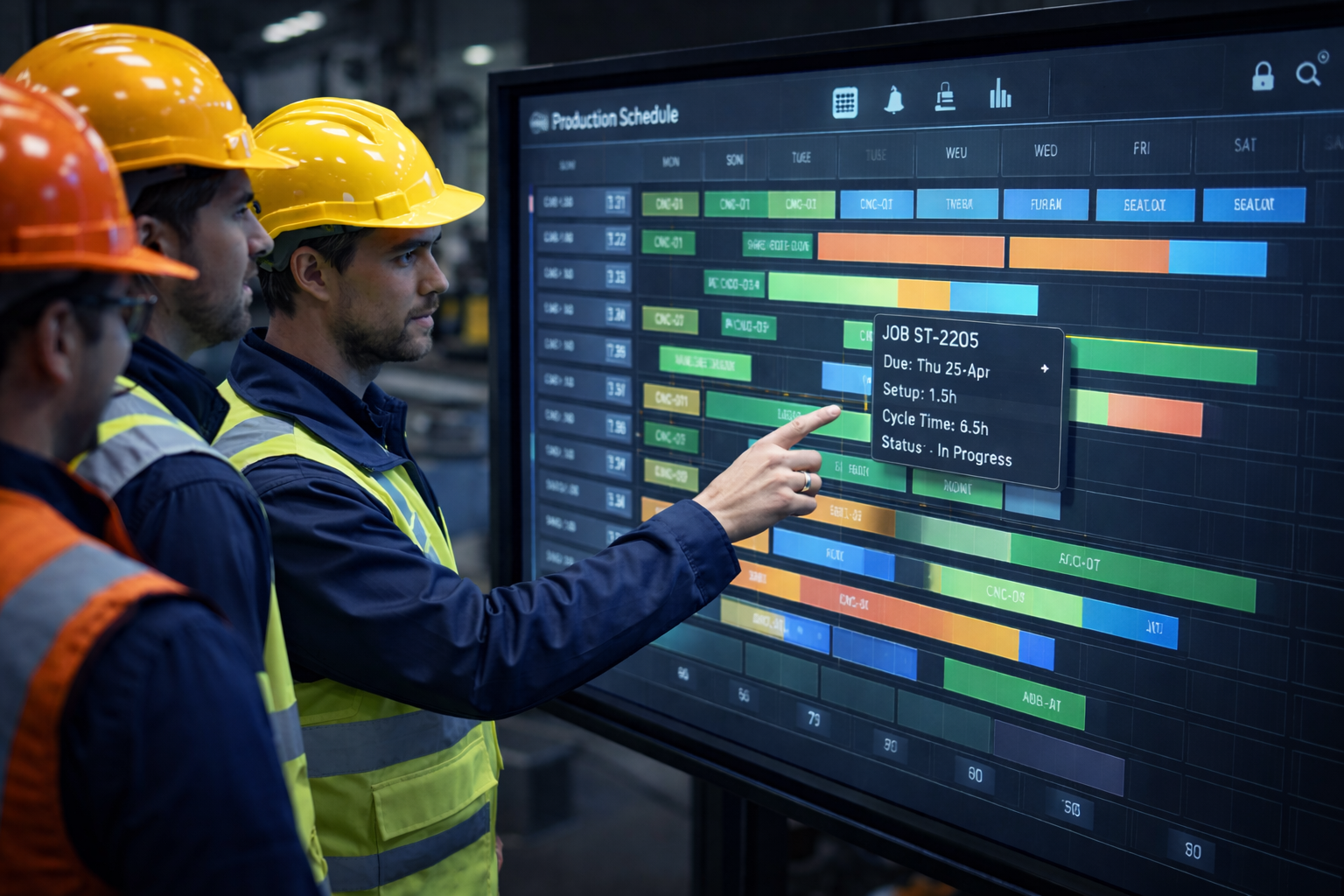
Manual planning methods and spreadsheet-driven scheduling struggle to keep pace with modern CPG complexity. Thousands of SKUs, frequent changeovers, allergen constraints, and short delivery windows create conditions where even minor disruptions cascade into significant downtime. Without advanced scheduling and real-time synchronization, manufacturers experience poor sequencing, idle equipment, and an inability to respond quickly when conditions change.
Equipment failures and inadequate maintenance.
Reactive maintenance remains one of the most expensive habits in manufacturing. Aging equipment, incorrect machine settings, operator error, and unplanned wear on components such as bearings, belts, gears, and seals all contribute to sudden breakdowns.
System instability and technology failures.
Legacy systems introduce their own form of downtime. Crashes, data inconsistencies, and manual workarounds disrupt automated workflows and prevent teams from accessing critical production data when it matters most. This risk grows as product variety increases and production requirements become more complex.
Supply chain and raw material disruptions.
Raw material shortages, delivery delays, quality issues, and poor traceability can bring production lines to a halt. Without integrated material management and real-time coordination, manufacturers struggle to align supply availability with production demand.
Product variant complexity and changeovers.
High product mix, frequent recipe changes, and extensive cleaning requirements add significant complexity. In food and beverage manufacturing especially, changeovers and sanitation cycles consume valuable production time if not optimized digitally.
Why reactive manufacturing fails lean objectives.
Being reactive does not eliminate downtime. It simply manages disruption after the cost has already been incurred. Lean manufacturing requires anticipation, coordination, and closed-loop learning across planning, production, quality, and maintenance.
Enhancing lean manufacturing with an integrated digital platform.
Modern Manufacturing Execution Systems provide the backbone for proactive operations. Unlike siloed legacy tools, an integrated MES connects top-floor planning to shop-floor execution and coordinates production activities across:
- Product lifecycle management (PLM).
- Enterprise resource planning (ERP).
- Factory automation and control systems.
An integrated approach to minimizing downtime.
Predictive maintenance and OEE for machine performance.
Combining MES-based Overall Equipment Effectiveness (OEE) with predictive maintenance shifts maintenance from reactive to preventative. Real-time performance monitoring highlights inefficiencies, while predictive analytics detect early signs of failure, such as abnormal vibration or rising temperatures.
Maintenance can then be scheduled during planned changeovers rather than during emergency stops, reducing unplanned downtime and stabilizing operating costs.
Optimized Planning, Scheduling, and Cleaning cycles.
Integrating MES with advanced planning and scheduling systems eliminates manual data transfers and enables dynamic sequencing based on real-time conditions. This allows manufacturers to reduce changeover time, optimize cleaning cycles, prevent contamination risks, and still meet delivery commitments.
Improved material handling and supply chain coordination.
Integrated MES platforms with material and logistics management capabilities ensure that the right materials arrive at the line at the right time. This reduces stockouts, minimizes quality issues from incorrect materials, and prevents avoidable production stops caused by logistical breakdowns.
Streamlined quality control and sampling.
Quality issues are a major source of downtime. Integrating MES with research, development, and laboratory systems, including LIMS, enables early detection of deviations before they escalate into batch failures. Catching defects close to their source avoids rework, scrap, and lengthy investigations later in the process, increasing throughput of compliant, high-quality products.
The ROI of proactive, lean manufacturing.
For executive teams, the value of reducing downtime is measurable and material:
- 5 to 10 percent improvement in OEE through predictive maintenance and optimized scheduling.
- 20 to 40 percent reduction in unplanned downtime.
- Lower maintenance and operating costs through planned interventions.
- Improved on-time delivery performance, protecting revenue and customer relationships.
- Faster response to demand volatility, supporting growth and resilience.
Downtime reduction is not a cost-cutting exercise. It is a margin protection and growth strategy. Explore proactive manufacturing for CPG