
Opening new pathways
The equipment industry is at a transformative moment. Electrification, autonomous technologies, and sustainability pressures are driving OEMs to rethink product strategies. For suppliers, this evolution represents a unique opportunity: delivering equipment component innovation through digital transformation, advanced simulation, and integrated design workflows.
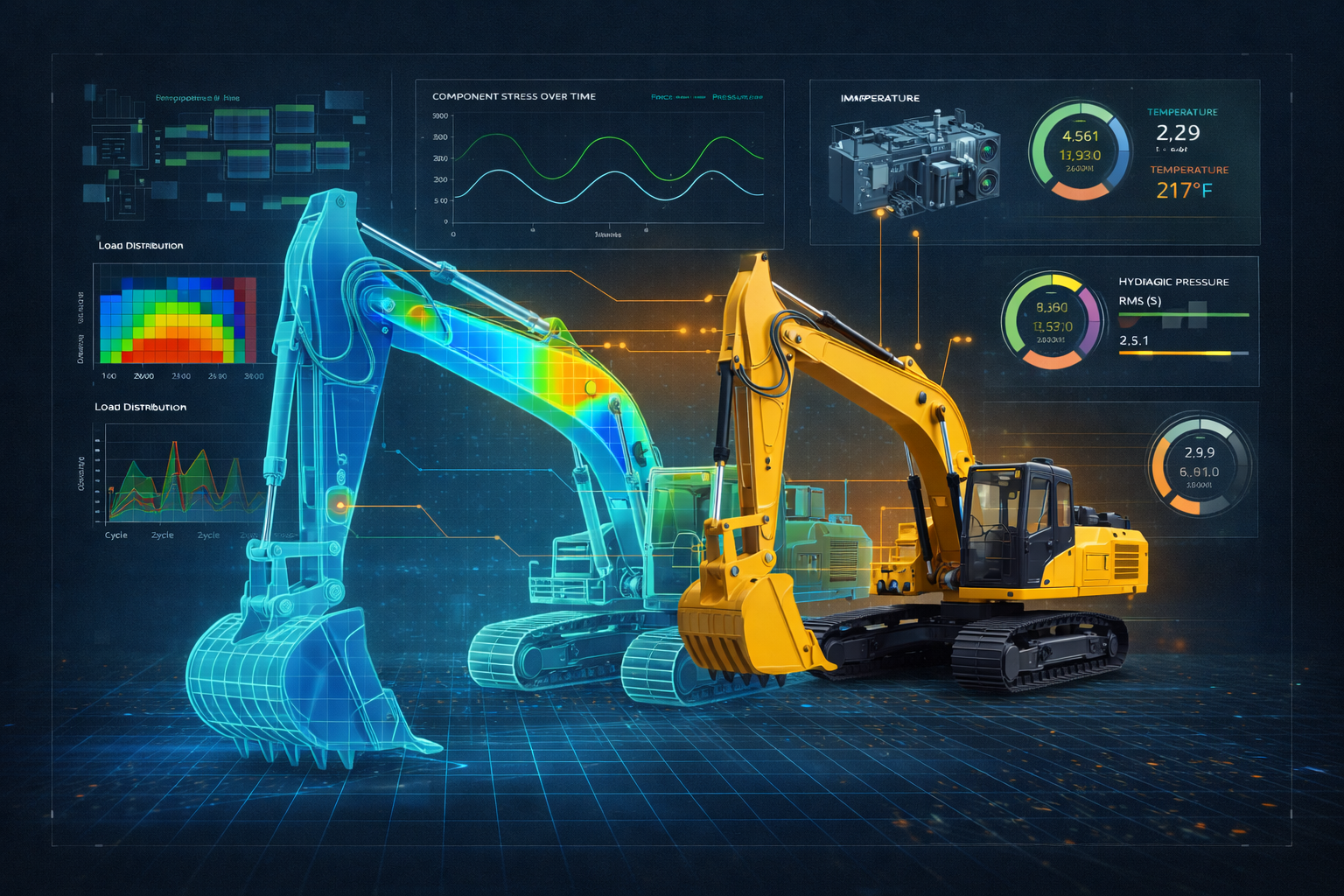
Suppliers can differentiate themselves by adopting digital twins, PLM, and multidisciplinary design frameworks to optimize components, reduce development risk, and provide OEMs with faster, more reliable solutions, all while generating measurable ROI.
Innovation opportunities for suppliers
Electrification is a primary trend reshaping the industry. OEMs increasingly rely on battery-powered, hybrid, or hydrogen systems, but often lack in-house expertise. Suppliers who can deliver optimized components, such as thermal management systems for batteries or electric drives, become strategic partners.
By leveraging digital twins and simulation-driven design, suppliers can:
- Test and validate components virtually before committing to physical prototypes.
- Optimize designs for performance, cost, and manufacturability.
- Align their solutions with OEM sustainability and electrification goals.
This approach not only speeds time-to-market but also reduces costly late-stage design changes.
Driving product differentiation
Cost reduction remains critical, but differentiation is equally essential. A Lifecycle Insights study of SMB heavy equipment suppliers found:
- 64% identified production cost reduction as a key driver.
- 59% prioritized product differentiation.
Suppliers can achieve both by:
- Adopting multidisciplinary design frameworks integrating mechanics, electronics, and software.
- Utilizing CAE tools to optimize components across multiple domains simultaneously.
- Collaborating with OEMs on shared digital platforms for data exchange.
These strategies enhance credibility, improve efficiency, and accelerate innovation.
Technology’s role in component innovation
Simulation and PLM tools are leveling the playing field for suppliers:
- Virtual verification ensures components meet stringent performance criteria before physical testing.
- Multi-physics simulations optimize battery systems, electric motors, and complex assemblies.
- PLM integration provides centralized workflows, KPI tracking, and decision documentation, ensuring transparent, reliable processes.
With cloud-based platforms, even smaller suppliers can access high-performance computing resources without large upfront costs, increasing competitiveness.
Strategic differentiation opportunities
Suppliers can further position themselves as industry leaders by:
- Adapting automotive electrification expertise to equipment systems.
- Pivoting from traditional combustion components to electrification or thermal management solutions.
- Leveraging AI-driven generative design to explore thousands of optimized architectures.
- Providing early-stage strategic guidance to influence OEM product decisions.
This combination of technical expertise and forward-thinking collaboration strengthens supplier credibility and long-term partnerships.
Process transparency builds trust
Trust is essential in supplier-OEM relationships. A robust PLM framework enhances transparency by:
- Standardizing workflows to reduce errors and improve efficiency.
- Documenting decisions for accountability and audit readiness.
- Facilitating consistent, secure data sharing across stakeholders.
Integrating simulation and PLM systems demonstrates process reliability, positioning suppliers as trusted partners capable of delivering high-quality innovation.
ROI for suppliers
Implementing a digital twin approach builds a foundation for:
- Faster Time-to-Market: Virtual simulation and integrated workflows reduce development cycles by 20–30%.
- Cost Savings: Avoiding physical prototyping and late-stage rework can cut project costs by 15–25%.
- Increased Win Rates: Suppliers positioned as trusted partners often secure longer-term contracts and higher-margin projects.
- Reduced Risk: Early validation mitigates failures in expensive components, preserving OEM confidence.
Example: A supplier using digital twin and CAE-driven design reduced battery system development time by 3 months and cut validation costs by $200,000, while delivering a higher-performing solution aligned with OEM electrification targets.
Conclusion
Innovation is not optional in equipment design and manufacturing. Suppliers that embrace digital transformation, multidisciplinary design, simulation, and PLM frameworks can:
- Deliver optimized components faster.
- Reduce development risk.
- Build strategic partnerships with OEMs.
- Generate measurable ROI.
By positioning themselves as trusted partners and innovation leaders, suppliers can reshape the industry and capture strategic advantage in a rapidly evolving market.
Ready to lead equipment innovation?