
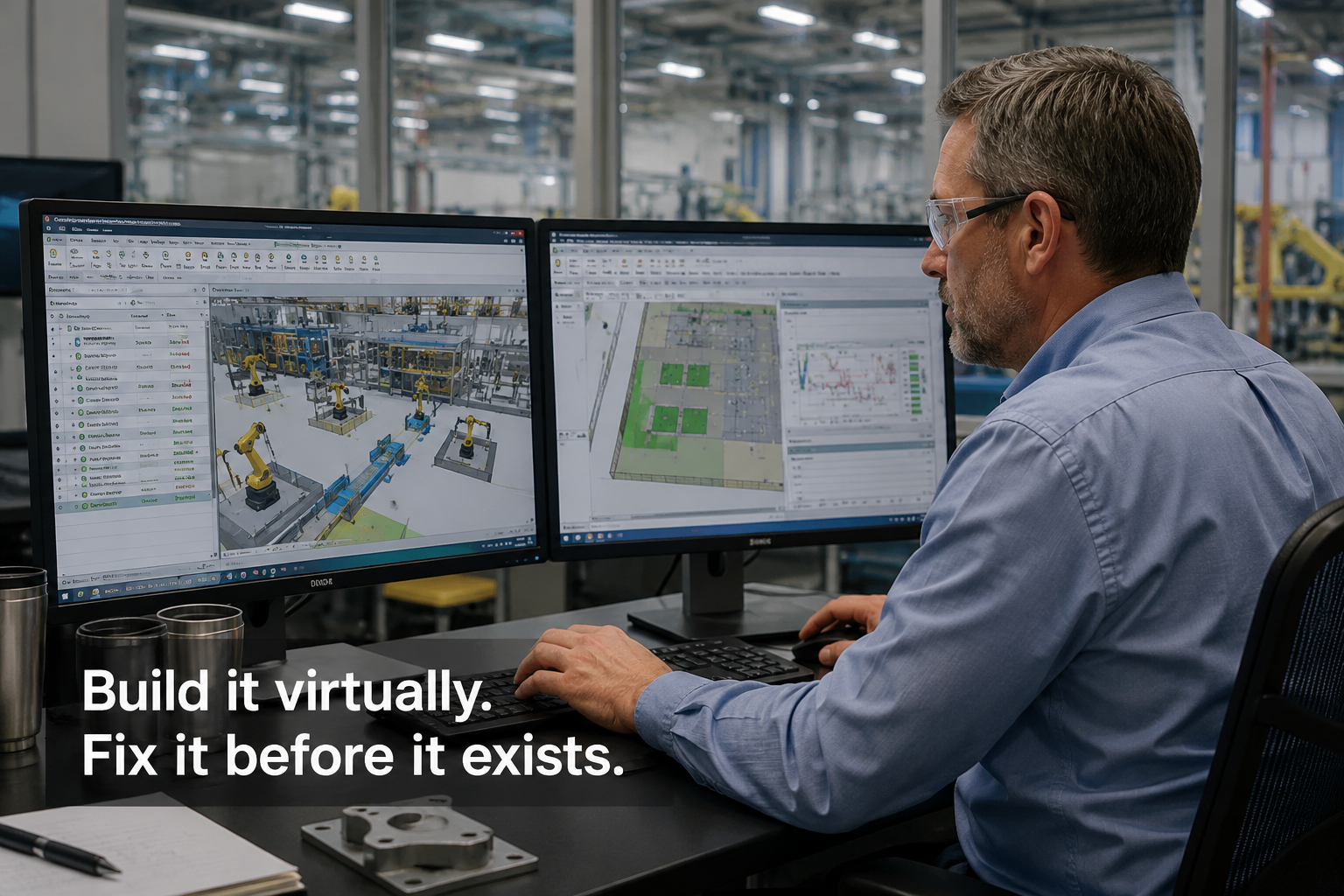
The path toward digitalization and the future of manufacturing.
Manufacturing is no longer defined by machines alone. It’s defined by data, connectivity, and the ability to make decisions in real time. Industry 4.0, IIoT, edge computing, and cloud platforms aren’t buzzwords anymore, they’re baseline expectations. Whether you’re building machine tools or running a job shop, the pressure is the same: produce faster, reduce cost, and eliminate downtime.
The difference now is how.
Smart machines are no longer optional.
Modern machines are becoming intelligent systems that do more than follow instructions, they respond, adapt, and improve using operational data. Three forces are driving this shift:
- Explosion of machine-generated data.
- Demand for higher throughput with fewer operators.
- Competitive pressure from fully digitalized manufacturers.
AI is playing a growing role by helping machines detect inefficiencies, predict failures, and adjust performance with minimal human intervention. The result is less firefighting on the shop floor and more predictable production outcomes.
Digital twins: the real ROI engine.
The digital twin is where most manufacturers either win or fall behind. A digital twin is a virtual model of a machine, production line, or even an entire factory. It allows you to simulate performance before anything is physically built or cut.
That changes everything. Instead of discovering problems during commissioning, you identify them during design. Companies implementing digital twin workflows typically see:
- 20–50% reduction in commissioning time.
- 15–30% reduction in engineering rework.
- 10–25% improvement in machine uptime.
- Up to 20% faster time-to-market.
This is not theoretical value. It is measurable operational savings tied directly to engineering and production cycles. Tools like Siemens Tecnomatix enable this kind of virtual validation across production systems, while platforms like Siemens Teamcenter connect design, engineering, and manufacturing data into one controlled digital thread.
CNC machines must be IoT ready.
CNC systems are no longer isolated controllers, they are networked production assets. IoT ready CNC environments allow:
- Real-time performance monitoring.
- Adaptive machining adjustments during production.
- Predictive maintenance scheduling.
- Automated job optimization based on machine load.
A modern CNC ecosystem extends beyond machine control into full digital integration, from CAD to CAM to real-time shopfloor execution. The benefit isn’t just efficiency, it’s control.
Cybersecurity: the cost of ignoring it is rising.
As factories become more connected, they also become more exposed. Ransomware and industrial cyberattacks are increasing because manufacturing environments are high-value targets with low tolerance for downtime. A modern security model requires:
- Segmented access controls by role.
- Secure machine-to-cloud communication.
- Continuous network monitoring.
- Strict separation of operational and administrative systems.
Weak security doesn’t just risk data, it can shut down production entirely.
The real factory of the future.
The factory of the future is not fully automated, it’s intelligently coordinated. Humans still matter, but their role shifts:
- Less manual machine intervention.
- More system oversight and optimization.
- Greater focus on exception handling and engineering decisions.
Cobots, CNC systems, and logistics automation will coordinate production flow, while humans focus on continuous improvement and system intelligence.
Why this matters now.
Ignoring digitalization is not neutral, it’s expensive. Here’s the business case in plain terms:
- Lower scrap rates through simulation-driven design.
- Reduced downtime through predictive maintenance.
- Faster quoting and production cycles.
- Higher machine utilization rates.
- Reduced engineering iteration costs.
Most manufacturers don’t lose money because they lack demand, they lose money because their systems can’t respond fast enough. Digitalization fixes that constraint.
Build your smarter factory.
If your operations still rely on disconnected systems, manual adjustments, or reactive maintenance, you are already behind. Start with:
- A digital twin pilot on one machine or production line.
- Connecting CNC systems to real-time monitoring.
- Building a single source of truth for engineering and production data.
- Assessing cybersecurity gaps in OT environments.
Digital transformation doesn’t require a full factory overhaul, but it does require a decision to stop working blind.
Modernize one production workflow. Start with visibility, not replacement. We can help.